· AI Agents · 7 min read
What Are AI Agents? A Complete Guide for 2025

What Are AI Agents? A Complete Guide for 2025
If you’ve been following tech news in 2025, you’ve likely heard the term “AI agents” thrown around. But what exactly are they? How do they differ from the chatbots and AI assistants we’re already familiar with? And why are they suddenly everywhere?
This guide will break down everything you need to know about AI agents, from the basics to real-world applications.
Understanding AI Agents: The Basics
At its core, an AI agent is an autonomous software program that can perceive its environment, make decisions, and take actions to achieve specific goals. Unlike traditional AI systems that respond to prompts, AI agents can work independently, plan multi-step tasks, and adapt to changing circumstances.
Key Characteristics
AI agents have several defining features:
- Autonomy: They can operate without constant human intervention
- Perception: They can observe and understand their environment
- Decision-Making: They can analyze situations and choose actions
- Goal-Oriented: They work toward specific objectives
- Adaptability: They can adjust their behavior based on feedback
How AI Agents Differ from Traditional AI
Traditional AI (Chatbots, Assistants)
- Reactive: Responds to user prompts
- Single-turn: Handles one request at a time
- Limited context: Works within the current conversation
- Human-dependent: Requires constant user input
AI Agents
- Proactive: Can initiate actions independently
- Multi-turn: Handles complex, multi-step processes
- Extended context: Maintains awareness across sessions
- Autonomous: Works toward goals with minimal supervision
Types of AI Agents
1. Simple Reflex Agents
These agents respond directly to current perceptions without considering history. They’re useful for straightforward, rule-based tasks.
Example: A temperature monitoring agent that turns on cooling when it detects heat above a threshold.
2. Model-Based Reflex Agents
These agents maintain an internal model of the world and can handle partially observable environments.
Example: A navigation agent that tracks its location even when GPS signals are temporarily lost.
3. Goal-Based Agents
These agents consider future actions and choose actions that help achieve their goals.
Example: An e-commerce agent that searches multiple sites, compares prices, and makes purchase recommendations.
4. Utility-Based Agents
These agents not only achieve goals but optimize for the best outcome based on utility functions.
Example: A trading agent that maximizes profit while minimizing risk.
5. Learning Agents
These agents improve their performance over time through experience and feedback.
Example: A customer service agent that gets better at resolving issues as it handles more cases.
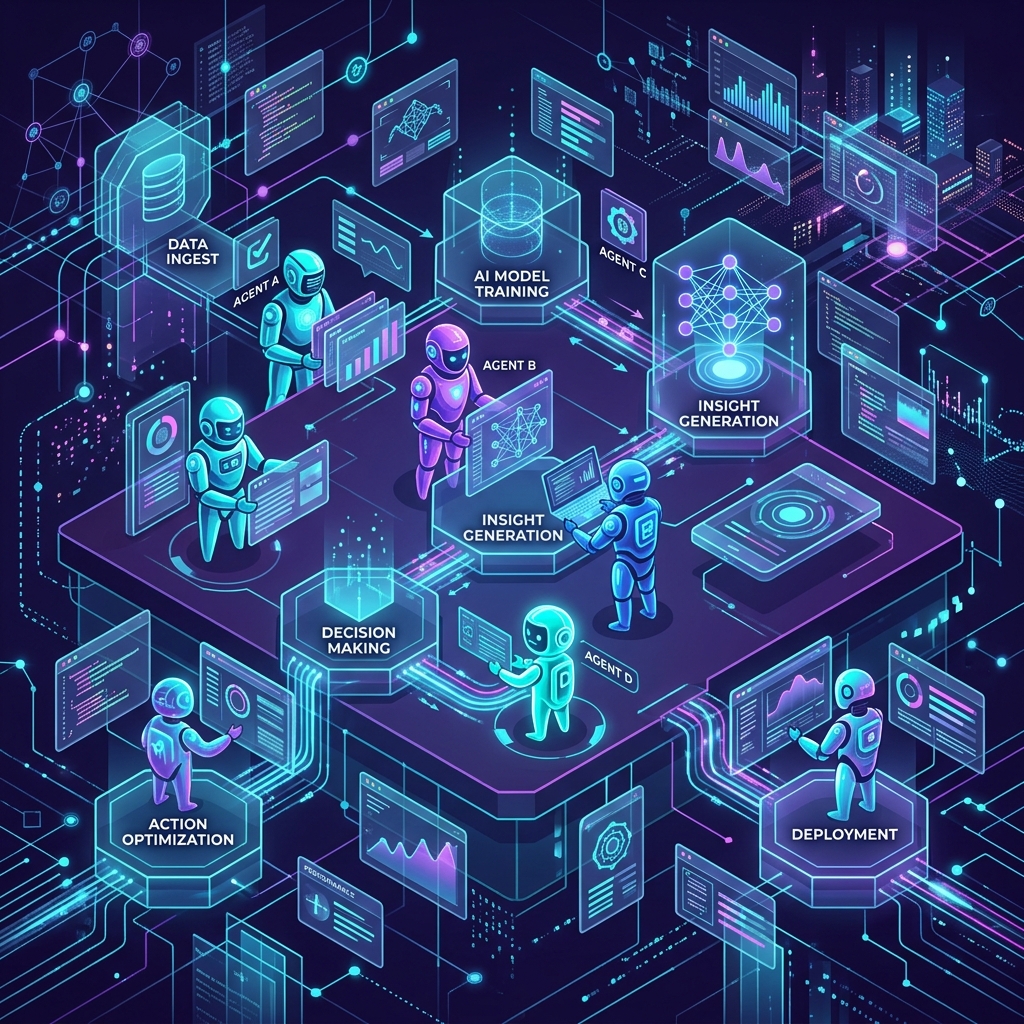
6. Multi-Agent Systems
Multiple agents working together, either collaboratively or competitively, to solve complex problems.
Example: A development team of agents where one handles frontend, another backend, and a third manages testing.
How AI Agents Work
The Agent Architecture
Most AI agents follow a similar structure:
┌─────────────────┐
│   Environment   │
│   (External)    │
└────────┬────────┘
         │
         ▼
┌─────────────────┐
│   Perception    │ ← Observes environment
└────────┬────────┘
         │
         ▼
┌─────────────────┐
│   Reasoning     │ ← Plans and decides
└────────┬────────┘
         │
         ▼
┌─────────────────┐
│    Action       │ ← Executes decisions
└────────┬────────┘
         │
         ▼
┌─────────────────┐
│   Feedback      │ ← Learns from results
└─────────────────┘
The Decision-Making Process
- Perception: The agent gathers information about its current state
- Analysis: It processes the information using its knowledge base
- Planning: It determines a sequence of actions to achieve goals
- Execution: It performs the planned actions
- Evaluation: It assesses the results and adjusts if needed
Real-World Applications
1. Software Development
AI agents are revolutionizing how code is written:
- Autonomous coding: Agents that write entire features
- Code review: Agents that check for bugs and suggest improvements
- Testing: Agents that generate and run test suites
- Documentation: Agents that maintain up-to-date docs
Tools: Google Antigravity, GitHub Copilot Workspace, Cursor
2. Customer Service
AI agents handle customer inquiries autonomously:
- 24/7 availability: Never-ending support
- Multi-channel: Works across chat, email, phone
- Context awareness: Remembers previous interactions
- Escalation: Knows when to involve humans
3. Business Process Automation
Agents automate complex workflows:
- Data processing: Extract, transform, and analyze data
- Report generation: Create and distribute reports automatically
- Workflow orchestration: Coordinate multiple systems
- Decision support: Provide recommendations based on data
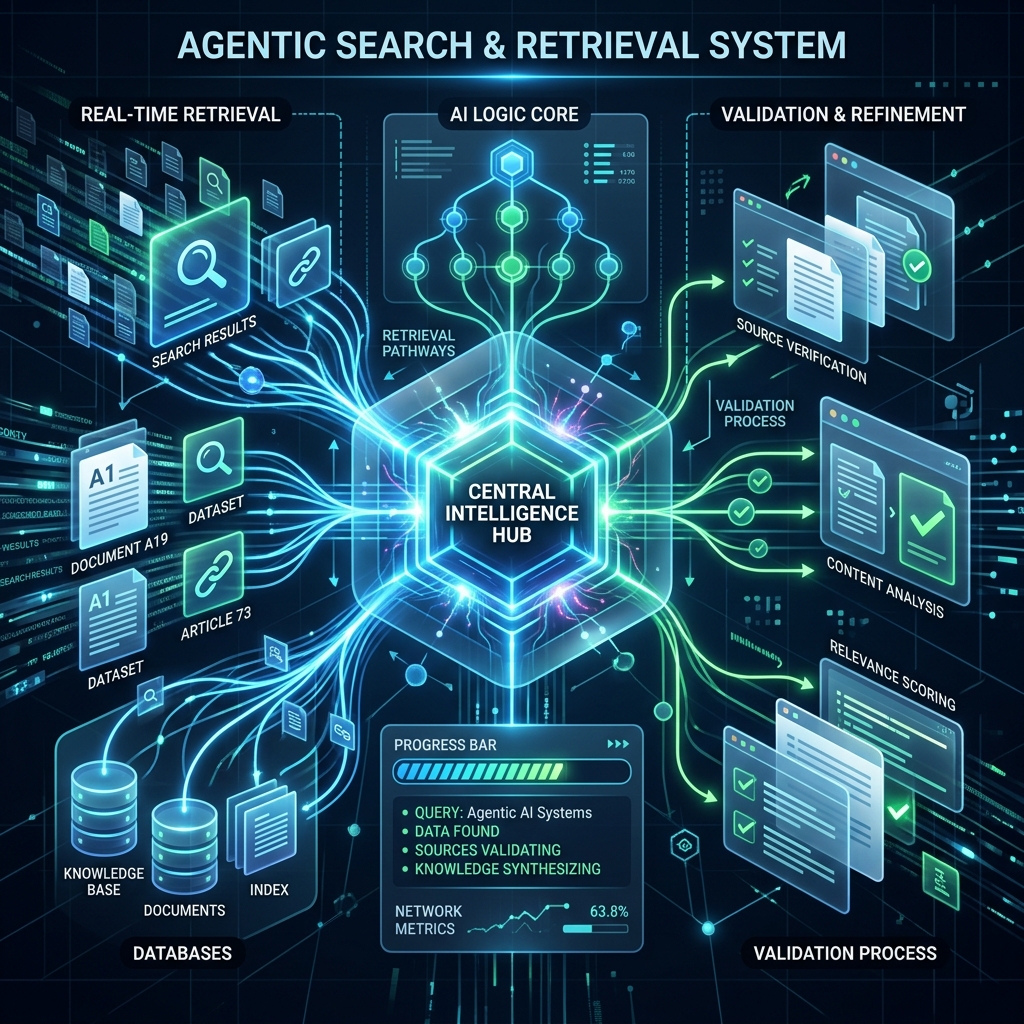
4. Research and Analysis
Agents assist with information gathering:
- Market research: Analyze trends and competitors
- Academic research: Find and summarize relevant papers
- Due diligence: Investigate companies or investments
- Content curation: Gather and organize information
5. Personal Assistants
Advanced personal AI agents:
- Schedule management: Optimize calendars and meetings
- Task automation: Handle routine personal tasks
- Information retrieval: Answer questions from knowledge base
- Recommendation: Suggest actions based on preferences
6. E-commerce and Shopping
Shopping agents that work on your behalf:
- Price comparison: Find best deals across platforms
- Product research: Compare features and reviews
- Purchase automation: Make buying decisions
- Inventory tracking: Monitor stock and notify you
Benefits of AI Agents
For Businesses
- Increased Efficiency: Automate repetitive tasks
- Cost Reduction: Reduce need for human labor
- Scalability: Handle growing workloads without proportional cost increases
- Consistency: Maintain quality standards 24/7
- Data-Driven Decisions: Make decisions based on comprehensive analysis
For Individuals
- Time Savings: Automate routine tasks
- Better Decisions: Get recommendations based on data
- Convenience: Handle tasks while you sleep
- Personalization: Agents learn your preferences
- Accessibility: Get help with complex tasks
Challenges and Limitations
Technical Challenges
- Reliability: Ensuring agents make correct decisions
- Security: Protecting against malicious agent behavior
- Scalability: Managing large numbers of agents
- Integration: Connecting with existing systems
- Error Handling: Recovering from mistakes gracefully
Ethical Concerns
- Job Displacement: Impact on employment
- Bias: Ensuring fair and unbiased decisions
- Transparency: Understanding agent decision-making
- Accountability: Who’s responsible for agent actions?
- Privacy: Handling sensitive data appropriately
Practical Limitations
- Context Understanding: Agents may misunderstand situations
- Unpredictable Behavior: Complex agents can act unexpectedly
- Maintenance: Agents require ongoing monitoring and updates
- Cost: Development and infrastructure can be expensive
- Learning Curve: Teams need time to adapt
Building AI Agents: Key Technologies
Large Language Models (LLMs)
Foundation models that provide reasoning capabilities:
- GPT-4, Claude, Gemini
- Enable natural language understanding
- Support complex reasoning tasks
Agent Frameworks
Tools for building and orchestrating agents:
- LangChain: Popular framework for LLM applications
- AutoGPT: Autonomous agent implementation
- CrewAI: Multi-agent orchestration
- Microsoft AutoGen: Multi-agent conversations
Vector Databases
Store and retrieve contextual information:
- Pinecone, Weaviate, Chroma
- Enable long-term memory
- Support semantic search
Tool Integration
Connect agents to external systems:
- API integrations
- Database connections
- File system access
- Web scraping capabilities
Best Practices for Working with AI Agents
1. Start with Clear Goals
Define specific, measurable objectives for your agents.
2. Implement Safety Measures
- Set boundaries on agent actions
- Require approval for critical decisions
- Monitor agent behavior continuously
- Have rollback mechanisms
3. Provide Quality Data
Agents are only as good as their training data and context.
4. Test Thoroughly
- Test in controlled environments first
- Gradually increase autonomy
- Monitor performance metrics
- Gather user feedback
5. Maintain Human Oversight
Even autonomous agents benefit from human review and guidance.
6. Document Everything
Keep records of agent decisions and actions for auditing.
The Future of AI Agents
Short-Term (2025-2026)
- Better reliability: More consistent performance
- Specialized agents: Domain-specific expertise
- Improved tooling: Easier development and deployment
- Enterprise adoption: Widespread business integration
Medium-Term (2027-2028)
- Multi-agent collaboration: Teams of specialized agents
- Advanced learning: Better adaptation and improvement
- Cross-domain agents: Agents that work across industries
- Regulatory frameworks: Clear guidelines and standards
Long-Term (2029+)
- General-purpose agents: Agents that can handle any task
- Agent ecosystems: Networks of interconnected agents
- Human-AI collaboration: Seamless partnerships
- Autonomous organizations: Companies run by agent teams
Getting Started with AI Agents
For Developers
- Learn the basics: Understand LLMs and agent architectures
- Choose a framework: Start with LangChain or similar
- Build simple agents: Begin with basic automation tasks
- Iterate and improve: Add complexity gradually
- Join communities: Learn from others’ experiences
For Businesses
- Identify use cases: Find tasks suitable for automation
- Start small: Pilot with non-critical processes
- Measure impact: Track metrics and ROI
- Scale gradually: Expand successful implementations
- Train your team: Ensure staff can work with agents
For Individuals
- Try existing tools: Use agent-powered applications
- Understand capabilities: Learn what agents can do
- Set clear expectations: Know their limitations
- Provide feedback: Help improve agent performance
- Stay informed: Keep up with developments
Conclusion
AI agents represent a fundamental shift in how we interact with artificial intelligence. They’re not just tools that respond to commands—they’re autonomous systems that can work toward goals, adapt to situations, and collaborate with humans and other agents.
As we move through 2025 and beyond, AI agents will become increasingly sophisticated and widespread. Understanding what they are, how they work, and how to work with them will be essential for developers, businesses, and individuals alike.
The key is to start learning now. Whether you’re building agents, deploying them in your business, or simply using agent-powered tools, the future belongs to those who understand and embrace this technology.
The question isn’t whether AI agents will change how we work—it’s how quickly you can adapt to this new paradigm.